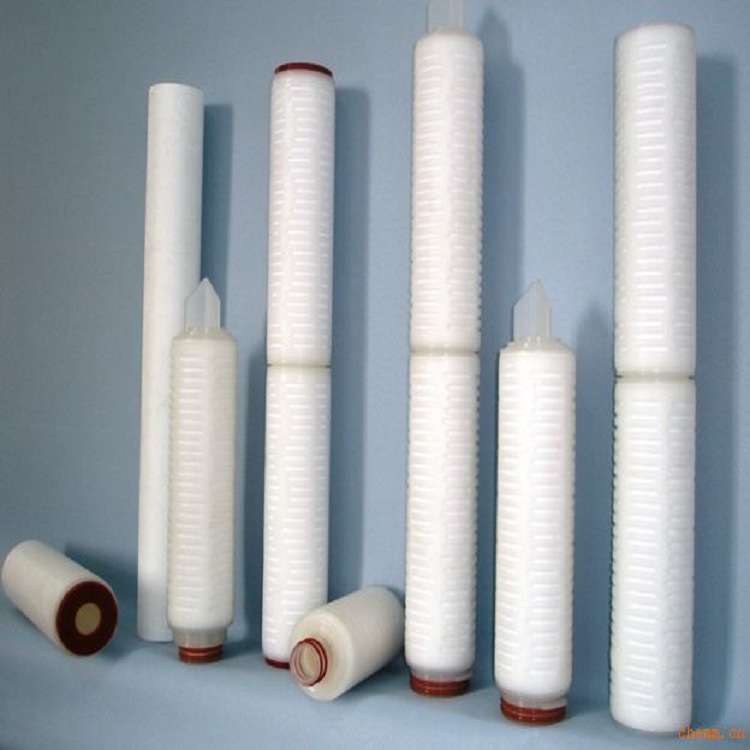
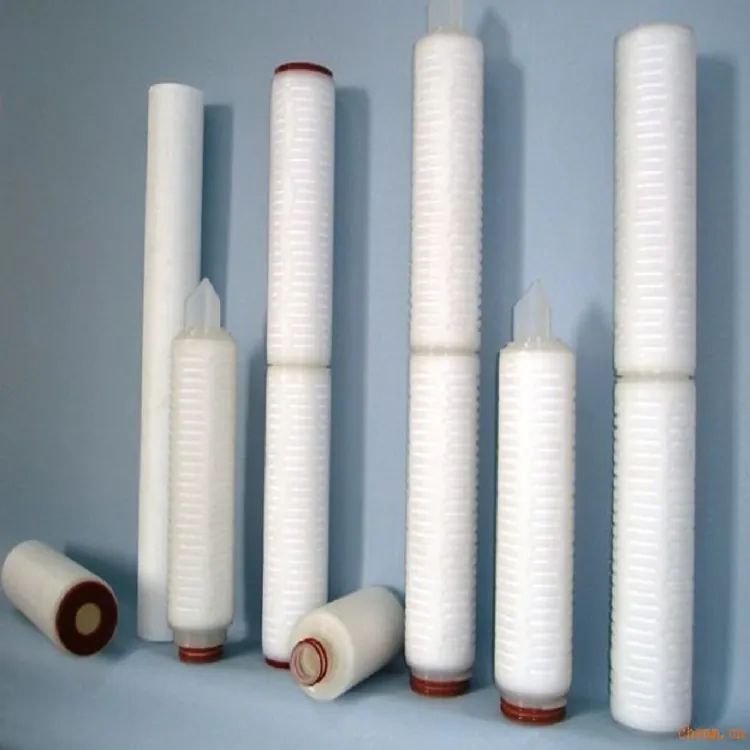
HIGH FLOW
PTFE Filter Cartridges
Large surface area for high-flow applications - JZ-PTFE Series
Stop Replacing Filters So Often — Switch to a Better Solution
The Problem
High-temperature and aggressive chemical environments destroy standard PP and PES filters. Frequent failures cause production stops and contamination risks.
Our Solution
PTFE membrane cartridges with 100% PTFE media. Withstands continuous 260C and resists virtually all chemicals including strong acids, bases, and solvents. Available in 0.1-40 micron absolute ratings.
Best For
Chemical processing, pharmaceutical API filtration, lithium battery electrolyte, hot gas filtration, aggressive solvent filtration.
Results
Chemical plant eliminated quarterly filter failures. Battery manufacturer achieved consistent quality with PTFE cartridges handling 98% sulfuric acid.
Length
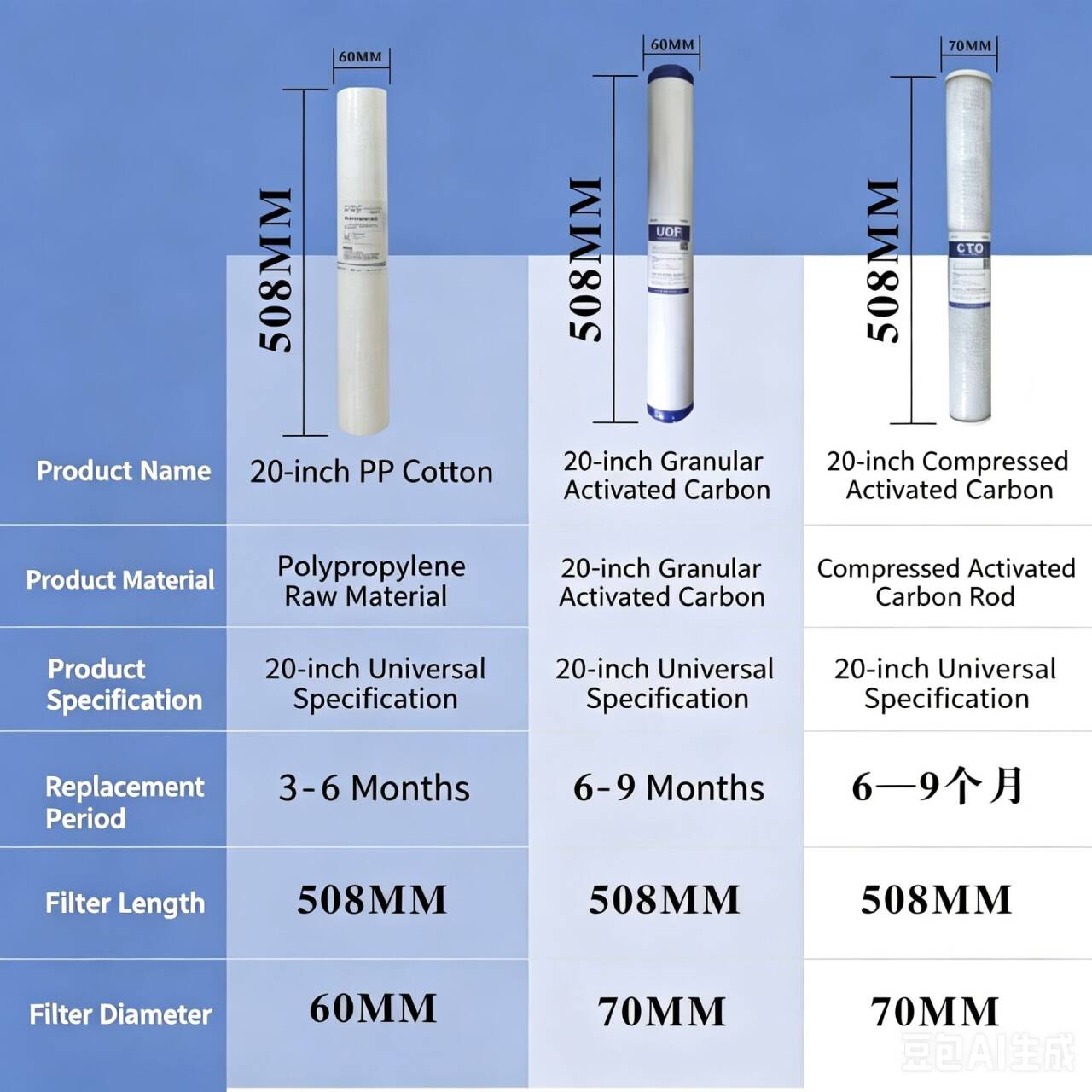
10" / 20" / 30" / 40"
OD / ID
2.5" x 1.1" (other on request)
Micron Ratings
0.45μm, 1μm, 5μm, 10μm, 20μm
Media Options
PTFE Membrane / PP / Polyester
Filtration Area (20")
>0.5 m² (varies by pleat count)
Max Operating Temp
260 °C (PTFE membrane)
Max DP
3.4 bar (50 psi) at 25 °C
End Caps
DOE / SOE-222 / SOE-226 / SOE-120
Applications
PTFE filter cartridge features a large filtration area achieved by pleating the filter media into a compact form. Available in PP microfiber, polyester, or PTFE membrane media. Offers low pressure drop, high flow rates, and the ability to be washed and reused. Widely used in industrial water treatment, chemical processing, beverage, and pharmaceutical applications.
Key Features
- Large Filtration Area -- Up to 5x more surface area than depth filters
- Low Pressure Drop -- Energy efficient even at high flow rates
- Washable & Reusable -- PP and polyester media can be cleaned
- Multiple Media Options -- PP, polyester, PTFE membrane
- High Temperature Rating -- Up to 80 °C continuous (PP) or 120 °C (PTFE)
- Absolute Ratings Available -- 99.98% efficiency at rated micron
PTFE vs PP vs PES — Which Media Do You Actually Need?
The three media are not interchangeable. PTFE is the one you choose when the fluid would destroy the others — not the default upgrade.
| Property | PTFE | PES | PP melt blown |
|---|---|---|---|
| Wettability | Hydrophobic (repels water) | Hydrophilic | Hydrophilic |
| Chemical resistance | Near-universal: strong acids, bases, solvents | Good, but not for aggressive solvents | Water and mild chemicals only |
| Temperature | Membrane rated 260 °C; complete cartridge usually 120–150 °C | Lower — check datasheet | About 80 °C |
| Retention | 0.1–1 µm absolute typical | 0.1–0.45 µm absolute | 1–100 µm nominal |
| Typical job | Solvents, hot chemicals, gas venting, battery electrolyte | Sterile filtration, pharma, final polish | Sediment, RO pretreatment |
| Cost | Highest | Mid | Lowest |
A note on the 260 °C figure: the PTFE membrane itself is rated to 260 °C, but a pleated cartridge is a composite — support layers, end caps and gaskets set the real limit, usually 120–150 °C. Ask which construction you are being quoted; we state the actual continuous rating on the datasheet for each build.
How to Select the Right Micron Rating
Pick the rating from what you are trying to remove, and remember that an absolute rating and a nominal rating are not the same claim.
| Rating | Removes | Where it is used |
|---|---|---|
| 0.1–0.22 µm | Bacteria, fine colloids | Sterile filtration, pharmaceutical, final polish |
| 0.45 µm | Bacteria, haze, fine particles | Pharma, beverage polish, electronics rinse water |
| 1–5 µm | Fine sediment, most suspended solids | Chemical process streams, RO pretreatment, solvent loops |
| 10–20 µm | Coarser sediment, protective pre-filtering | Upstream guard filters, dirty feed water |
| 40 µm | Large particulate, debris | Coarse pre-filtration, cooling water, intake protection |
Frequently Asked Questions
What is a PTFE filter cartridge?
A pleated cartridge built on a PTFE (polytetrafluoroethylene) membrane. PTFE is chemically inert and hydrophobic, so it is used where standard PP or PES cartridges would be attacked by the fluid or softened by heat — strong acids, bases, solvents, and high-temperature gas streams.
What micron ratings are available?
Standard builds run 0.22, 0.45, 1, 5 and 10 micron. Finer (0.1 micron) and coarser (up to 40 micron) ratings are available on request. Tell us what you need removed, not just the number — the right rating follows from the contaminant, and an absolute rating is a stronger claim than a nominal one.
What applications need PTFE cartridges?
Pharmaceutical API filtration, chemical processing, lithium battery electrolyte, high-temperature gas filtration, aggressive solvent loops, and strong-acid service (we supply plants filtering 98% sulphuric acid). If a PP cartridge fails within weeks, or the fluid is hot and chemically aggressive, PTFE is the right answer.
Can PTFE cartridges be cleaned and reused?
The membrane resists most cleaning agents, so cartridges can often be back-flushed or chemically cleaned rather than replaced. Whether it is economic depends on the contaminant — a filter blinding with solids is not usually worth washing, while one loaded with a valuable product often is.
Which end caps and gasket materials can you supply?
DOE, SOE-222, SOE-226 and SOE-120 end caps, with gaskets in silicone, EPDM, Viton or PTFE-encapsulated depending on the chemistry. The gasket is often the first thing to fail in aggressive service — specify it with the fluid in mind, not just the membrane.
What do you need to quote a PTFE cartridge?
The fluid and its temperature, the micron rating or the particle size you are removing, the cartridge length, the end cap style, the housing it goes into, and quantity. If you are replacing an existing cartridge, a photo of its label is the fastest route — send it to us and we will match it.
📦 Free Samples Available
Just pay shipping. Test our quality before you buy in bulk.
📄 Download Datasheet
📦 Free Samples Available
Just pay shipping. Test our quality before you buy in bulk.
Contact us on WhatsApp for faster response
Inquire About PTFE Filter Cartridge