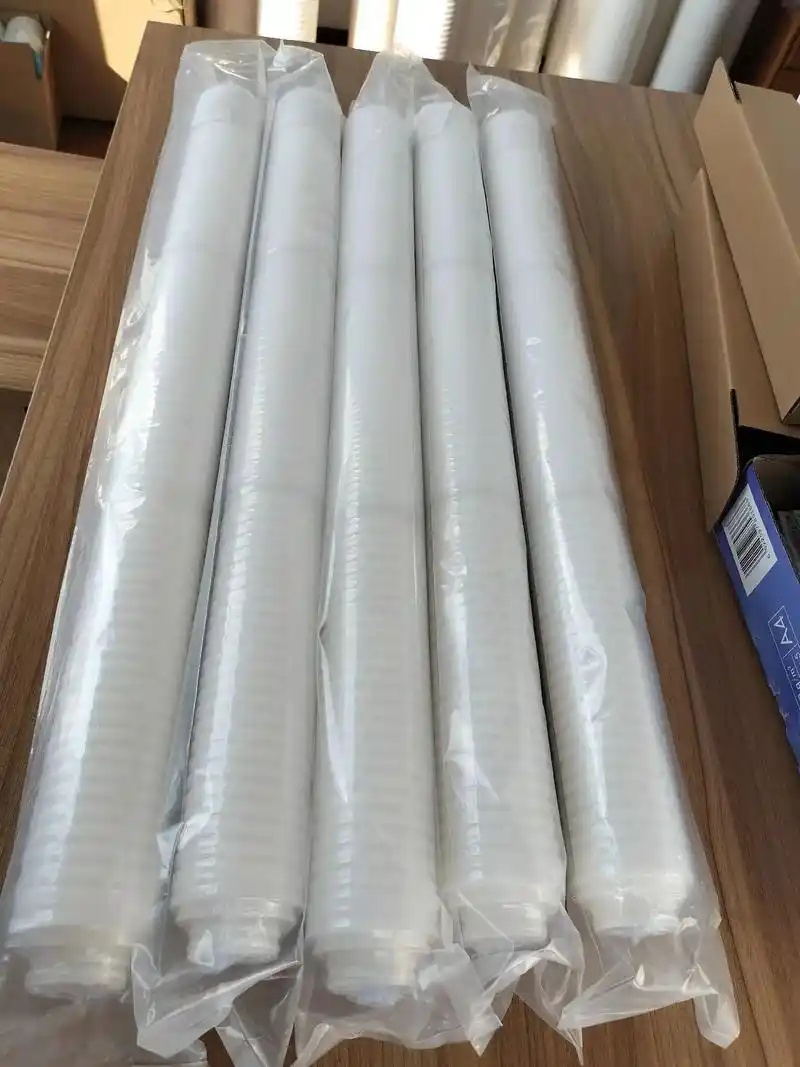
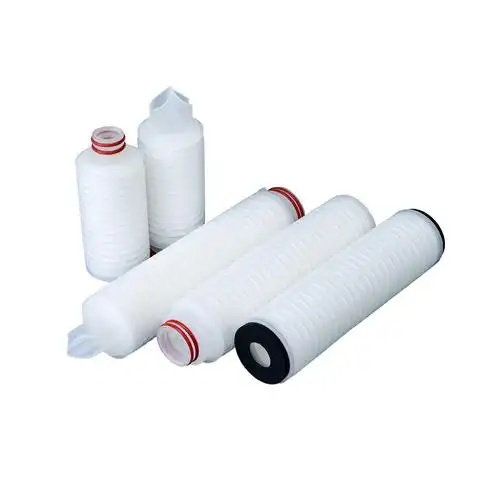
PES membrane cartridges are chosen when the requirement is absolute filtration with high flow and low extractables, which is why they appear in pharmaceutical and final-polish duty. They are not a default choice, and using them where a depth cartridge would do is an expensive habit.
The practical distinction: polypropylene melt-blown cartridges are depth filters — they trap particles throughout their thickness, which gives high dirt-holding capacity and a low price per cartridge. PES membranes are surface filters — particles are retained at the membrane, giving predictable absolute ratings and sharp cut-off, but a lower tolerance for heavy sediment. Put a PES cartridge behind unfiltered surface water and it blinds in days. Put it behind a proper pre-filter and it performs for months.
PTFE is the third case: chemically inert and used where the fluid would attack other media, or where hydrophobic venting is required. It costs more and flows less per unit area, so it is specified for compatibility rather than for throughput.
| Media | Type | Best for | Watch out for |
|---|
| PP melt-blown | Depth | General pre-filtration, high sediment loads, low cost per cartridge | Nominal rather than absolute rating |
| Wound string | Depth | Graded density, surface water, cost per cubic metre | Fibre shedding on some yarns |
| PES membrane | Surface | Absolute filtration, pharmaceutical, final polish | Blinds quickly without proper pre-filtration |
| PTFE | Surface | Chemical compatibility, hydrophobic venting | Higher cost, lower flow per unit area |
| Carbon block | Adsorption | Chlorine, taste and odour reduction | Not a particulate filter on its own |