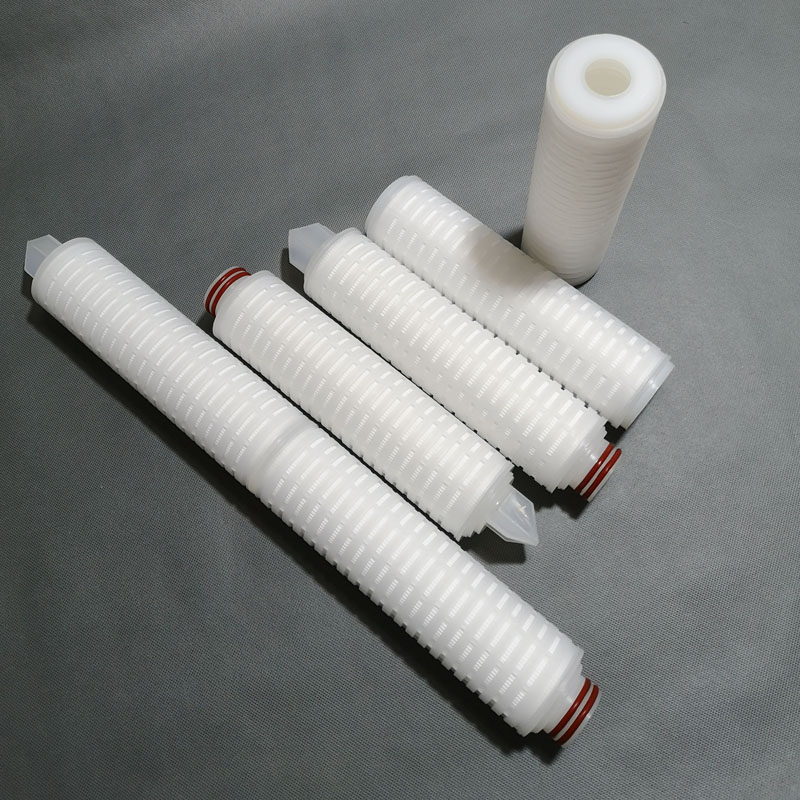
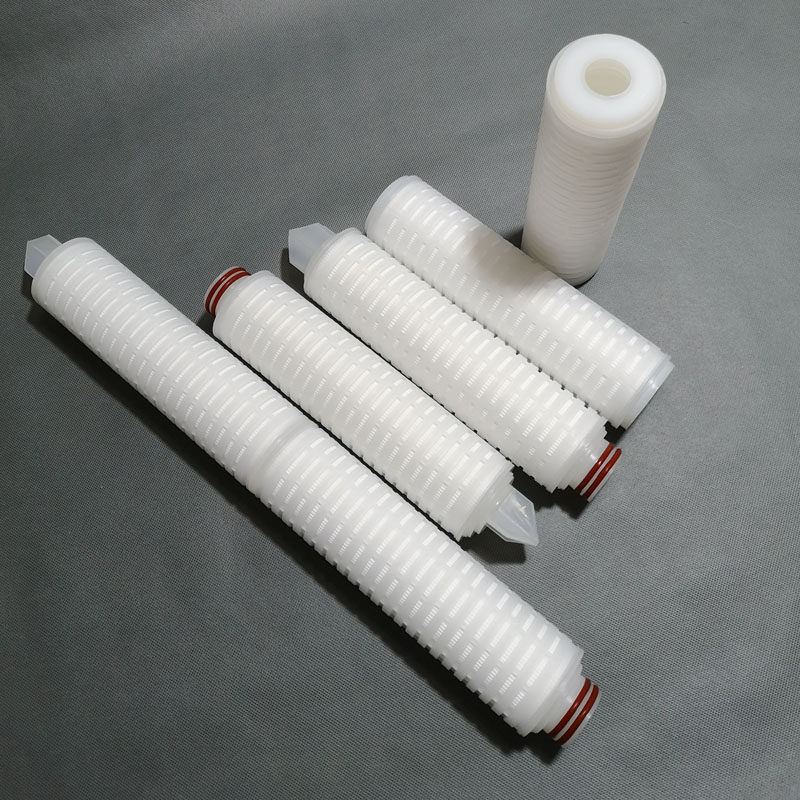
The winding pattern is the engineering in a wound cartridge, and it is why two cartridges of the same micron rating behave differently. A graded-density winding — coarse outside, fine inside — traps large particles on the outside of the cartridge and finer ones progressively deeper. That gives high dirt-holding capacity before differential pressure climbs, which for surface water duty is the number that decides your cost per cubic metre.
A uniform winding has the same density throughout, which is cheaper to make and adequate for clean feed water. Specifying graded winding where the water is clean buys capacity you do not need; specifying uniform winding where the water is dirty means changing cartridges more often than the budget assumed.
| Parameter | Range we produce | Practical effect |
|---|
| Micron rating | 1, 5, 10, 20, 25, 50 micron | Finer rating, shorter life on the same water |
| Winding | Uniform or graded density | Graded holds more before pressure climbs |
| Core | PP or stainless steel | Stainless for high temperature or repeated cleaning |
| Yarn | PP, cotton, polyester | PP for chemical tolerance, cotton for lower cost |
| Length | 10, 20, 30, 40 inch | Match the housing; do not adapt with spacers |
| End treatment | DOE, SOE, 222, 226 | Must match the housing — the most common order error |