Pharmaceutical Water Filtration and Treatment Systems
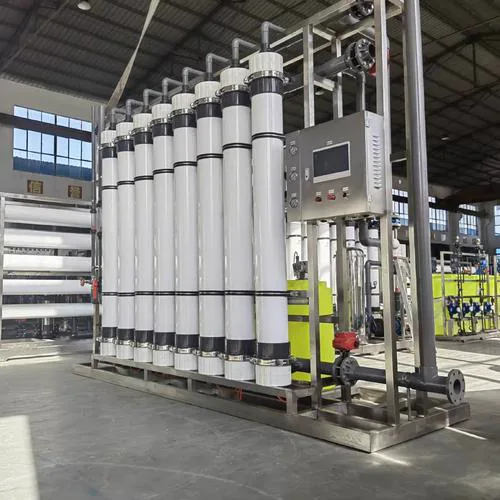
Water is the most widely used raw material in pharmaceutical manufacturing. It appears in virtually every dosage form — tablets, injections, syrups, and sterile preparations — and its quality directly determines product safety and regulatory compliance. For pharmaceutical manufacturers, water treatment is not an optional investment; it is a validated, documented requirement governed by strict pharmacopeial standards. This guide explains the filtration requirements for pharmaceutical water systems and how to select the right cartridges at every stage.
Why Water Quality Is Non-Negotiable in Pharma
Unlike food and beverage production, where off-taste is the main concern, pharmaceutical water quality is a matter of patient safety. Contaminated water can introduce endotoxins, bacteria, and chemical impurities into injectable drugs, with potentially fatal consequences. That is why regulatory bodies — the FDA, EMA, and national pharmacopeias — require pharmaceutical manufacturers to produce water to exacting specifications and to validate every step of the treatment process. (The food and beverage side of the same problem — where off-taste rather than patient safety is the driver — is covered in water filtration and treatment for the food and beverage industry.)
The two principal grades of pharmaceutical water are:
- Purified Water (PW) — used in non-parenteral preparations, cleaning, and as feed to WFI systems. Conductivity must be below 1.3 µS/cm at 25°C, and total organic carbon (TOC) below 500 ppb.
- Water for Injection (WFI) — the strictest grade, used in injectables and sterile products. It must meet all PW requirements plus endotoxin limits below 0.25 EU/ml and microbial counts of no more than 10 CFU/100 ml.
USP Water Grades — What the Limits Actually Are
USP purified water is not specified by a single number. Each grade has its own pharmacopoeial definition, its own limits, and its own permitted production route, and the grade you need is set by the route of administration of the product — not by preference. The table below summarises the grades most plants work with. Values follow USP (United States Pharmacopeia); the European Pharmacopoeia and Japanese Pharmacopoeia are harmonised on the key attributes, so a system designed to USP limits will generally satisfy EP and JP as well, subject to your own regulatory review.
| Grade | Pharmacopoeial basis | How it is produced | Conductivity (25 °C) | TOC | Endotoxin | Microbial |
|---|---|---|---|---|---|---|
| Purified Water (PW) | USP <1231>, conductivity <645>, TOC <643> | RO, RO followed by EDI, or distillation | ≤ 1.3 µS/cm | ≤ 0.50 mg/L | Not specified | 100 CFU/mL commonly applied as an action limit |
| Water for Injection (WFI) | USP <1231> | Distillation, or a validated non-distillation process such as RO-based production | As PW | As PW | < 0.25 EU/mL | ≤ 10 CFU/100 mL |
| Sterile Purified Water | As PW, plus sterilisation | PW passed through a sterilising-grade filter, or terminally sterilised | As PW | As PW | Not specified | Sterile |
| Bacteriostatic Water for Injection | As WFI, plus preservative | WFI with an added preservative (commonly benzyl alcohol) | As WFI | As WFI | As WFI | As WFI |
| Pure Steam | USP <1231> | Steam generated from treated water, used for sterilisation rather than as an ingredient | — | — | — | — |
Two points that catch buyers out. First, USP no longer requires WFI to be produced by distillation — a validated RO-based process is acceptable under current USP, and it is cheaper to run, but whether it is acceptable to your inspecting authority and in your market is a regulatory question you must settle before you buy, not after. Second, conductivity is tested in stages, not against a single reading: USP <645> applies a three-stage test in which out-of-range conductivity on the first measurement is resolved by further testing with dissolved gas removed, so a single high reading is not automatically a failure.
Pharmaceutical Water Treatment: Pretreatment, RO and the Distribution Loop
Filtration cartridges are only one part of a pharmaceutical water treatment system, but they carry a disproportionate share of the risk, because they sit between the plant and the product. Understanding where they sit in the whole train explains why the cartridge specification changes from stage to stage.
| Stage | What it is protecting against | Typical equipment | Practical note |
|---|---|---|---|
| 1. Softening | Hardness scaling inside RO elements | Strong-acid cation resin softener | Alternative to antiscalant dosing; the choice is usually made on wastewater and chemical-handling constraints rather than on cost |
| 2. Dechlorination | Chlorine destroying the RO membrane | Activated or catalytic carbon | Polyamide RO membranes are attacked by free chlorine. This is the single most expensive pretreatment mistake in pharma plants: a chlorine breakthrough upstream of the RO is unrecoverable. See RO pretreatment for how to design against it. |
| 3. Prefiltration | Particles and carbon fines reaching the membrane | 5 µm then 1 µm PP melt blown cartridges | Staged, so the coarse cartridge takes the dirt load and the fine one does the polishing |
| 4. Reverse osmosis | Dissolved ions, organics, pyrogens | 4040 or 8040 elements | The primary purification step for PW in most modern plants; our pharmaceutical industry page lists the cartridge options by stage |
| 5. EDI or mixed bed | Residual ions after RO | Electrodeionization, or regenerated mixed-bed resin | EDI reaches USP conductivity continuously without chemical regeneration; mixed beds are cheaper to buy and more expensive to run |
| 6. Storage and distribution | Biofilm growth in the loop | 316L stainless loop, kept hot (typically 80 °C and above) or ozonated | Most microbial failures in pharma water originate in the loop, not in the treatment plant |
| 7. Point of use | Contamination at the moment of use | 0.2 µm sterilising-grade PES membrane cartridge | The last barrier before the product; treated as a critical component in change control |
The Pharmaceutical Water System: Where Filtration Fits
A typical pharma water system follows a multi-stage train. Each stage protects the next, and filtration cartridges are the workhorses of the pretreatment and polishing steps.
| Stage | Function | Typical Cartridges |
|---|---|---|
| Raw water intake | Remove suspended solids, sand, rust | 20-50 µm string wound |
| Clarification | Reduce turbidity and large particulates | Multimedia filter + 5 µm PP melt blown |
| Dechlorination | Protect RO membranes and downstream | Activated carbon cartridge |
| RO pretreatment | Final particle removal before membranes | 1 µm PP melt blown cartridge |
| Reverse osmosis | Remove ions, organics, endotoxins | RO membrane elements (4040/8040) |
| Polishing | Sterile final filtration at use points | 0.2 µm pleated PES membrane |
Selecting Cartridges for Pharmaceutical Duty
Not all filter cartridges are suitable for pharmaceutical use. The critical selection criteria are:
- Material purity — cartridges must be manufactured from pharmaceutical-grade polypropylene or PES with minimal extractables and no leachables that could contaminate the water.
- Construction integrity — thermal-bonded or melt-sealed construction prevents bypass and media migration.
- Validation support — reputable manufacturers provide bacterial retention and extractables data to support your validation files.
- Compatibility — all wetted materials must withstand hot water sanitization (80-85°C) or chemical cleaning cycles.
Prefiltration: Protecting Your RO Membranes
Reverse osmosis membranes are the most expensive components in a pharma water system, and they are extremely sensitive to fouling. A well-designed pretreatment train uses depth filter cartridges to remove particles before they reach the membrane surface. The standard approach is staged filtration: a 5 µm PP melt blown cartridge removes the bulk of sediment, followed by a 1 µm cartridge for fine polishing. This staged design maximizes dirt-holding capacity while protecting the membrane — significantly extending RO element life and reducing operating costs.
Final Filtration: The 0.2 µm Barrier
At the point of use, pharmaceutical water passes through a sterilizing-grade filter. The 0.2 µm pleated PES membrane cartridge is the industry standard for this duty because it retains virtually all bacteria and particulates while delivering high flow rates and low pressure drop. For WFI loops that are kept hot (above 80°C), cartridges must be constructed from materials that withstand continuous high-temperature operation. Hydrophilic PES membranes are preferred for their low protein binding and superior flow characteristics.
Validation and Qualification: What Your Inspector Will Ask For
A pharmaceutical water system is not commissioned when it produces compliant water. It is qualified when you can demonstrate, on paper and with data, that it reliably produces compliant water — and that every component that touches the water is controlled. Filtration sits inside that scope, which is why "can you supply validation documentation" is a buying question, not an afterthought.
| Phase | Question it answers | What the filtration scope includes |
|---|---|---|
| DQ — Design Qualification | Is this the right design for our product and our water? | Cartridge grade, pore rating, materials of construction, flow rating at the design flow, temperature rating for the sanitisation regime |
| IQ — Installation Qualification | Was it installed as specified? | Correct part numbers, correct orientation, no bypass, housing and wetted materials verified against drawings |
| OQ — Operation Qualification | Does it work across the intended operating range? | Differential pressure at design flow, integrity test result, sanitisation cycle completed without damage |
| PQ — Performance Qualification | Does it keep producing compliant water over time? | Sampling of conductivity, TOC and microbial counts at defined points over a defined period, with results inside limits |
Performance qualification is where most schedules run into trouble. For a purified water or WFI system, PQ is normally run as a defined campaign of daily sampling — commonly two to four weeks, with some sites running a shorter three-day campaign depending on their validation plan and on what their inspecting authority expects. Whatever the length, the data has to show the system holding inside limits at the point of use, with the final filters installed and the loop running as it will in production. If your supplier cannot supply the extractables data and integrity test method that these stages reference, the qualification file has a hole in it.
Filter Change Control — the Buying Question That Gets Asked Late
In a GMP environment, a filter cartridge is a controlled component. Swapping to a cheaper equivalent without going through change control is one of the fastest ways to fail an inspection, and switching supplier mid-qualification can cost more in re-validation than the cartridges ever saved.
Four questions are worth settling before you place a first order, because each one is expensive to answer afterwards:
- Extractables and leachables. Ask for extractables data generated under a recognised protocol rather than a bare "food grade" statement. USP <665> covers plastic components and systems used in pharmaceutical manufacturing, and standardised extractables protocols are commonly used to support the assessment. Extractables are what can be driven out under exaggerated conditions; leachables are what actually appears in your water in normal use — the dossier has to address both.
- Bacterial retention. For a sterilising-grade 0.2 µm filter, ask whether retention has been validated by a recognised bacterial challenge test (ASTM F838 is the usual reference) rather than inferred from a pore-size claim.
- Post-use integrity testing. Sterilising filters are normally integrity-tested after use as well as before, so the test method and acceptance criteria must be documented and reproducible on your housing.
- Change notification. Ask contractually for advance notice of any change in materials, construction or manufacturing site. A silent material change is what turns a validated filter into an unvalidated one.
None of this is exotic. The problem is that it is usually raised after the supplier has been selected, at which point the paperwork is either available or it is not. Ask for it with the quotation.
Sterile Filtration in the Pharmaceutical Industry
Sterile filtration is a different duty from water filtration, even though the same cartridge families are used. Where a water filter polishes a continuous stream, a sterilising filter is often the sterilising step itself — the only barrier between a non-sterile solution and a sterile product, particularly for heat-labile formulations that cannot be terminally autoclaved. That changes what you have to prove about it.
A filter is not sterile because it is rated 0.2 µm. It is a sterilising-grade filter when its bacterial retention has been validated by a recognised challenge test, typically ASTM F838, and when it can be integrity-tested before and after use on your own housing. Three practical consequences follow:
- Integrity testing is part of the process, not a quality check. Bubble point, diffusion or pressure-hold testing before the run confirms the filter is intact; the post-use test confirms it stayed intact while the product passed through. A failed post-use test invalidates the batch, so the acceptance criteria have to be established for the actual product — viscosity and surface tension both shift the measured values.
- Membrane choice is driven by product loss as well as retention. Hydrophilic PES membranes bind very little protein, which is why they are the default for biological solutions: a hydrophobic membrane in the same duty will adsorb product and can blind over. For venting tanks and protecting sterile hold vessels, the requirement inverts and a hydrophobic PTFE membrane is correct, because it must pass air and stop water.
- Sizing is a validation variable. Flow rate per unit of membrane area, initial pressure drop, and the pressure drop at the end of the run all have to be inside the validated envelope. A filter that is oversized is wasteful; one that is undersized fails integrity at the end of a long run, which is the expensive failure mode.
For the water loop itself, the same logic applies at the point of use: a pleated cartridge at 0.2 µm absolute is the standard final barrier, and its specification, supplier and change history all belong inside the change-control system rather than in the maintenance budget. If you also handle the certification side of procurement, the definitions of the relevant standards are set out in our guide to filter cartridge certification standards.
Monitoring and Change-Out Schedules
Pharmaceutical filtration is a controlled process, not a set-and-forget operation. Operators monitor:
- Differential pressure across each filter housing — a rise of 10-15 psi signals a loaded cartridge
- Conductivity and TOC — continuous online monitoring verifies water quality
- Microbial counts — periodic sampling confirms the sterilizing barrier is intact
- Integrity testing — bubble point or forward flow tests validate membrane cartridges after installation and at intervals
With these controls, prefilters typically last 1-3 months and final membrane cartridges 6-12 months, but the validated change-out schedule — not the calendar — is the deciding factor.
Conclusion: Partner with a Filtration Specialist
Pharmaceutical water filtration demands consistent, validated, high-purity products. Working with a manufacturer who understands both the regulatory landscape and the technical requirements ensures you get cartridges that perform and documentation that supports your validation program. Whether you need prefiltration cartridges for RO protection or sterilizing-grade final filters, the right partnership protects both your product quality and your compliance standing.
Looking for pharmaceutical-grade filter cartridges? Jingze Water supplies PP melt blown, PES membrane, carbon block, and RO membrane products with OEM/ODM support. Ask about our extractables documentation and validation support.