Dairy Industry Water Filtration: Standards & Solutions
Why Water Quality Matters in Dairy Processing
Milk itself is 87% water, and water plays a far bigger role in a dairy plant than most people realize. Water is used as an ingredient in products like yogurt, cheese and ice cream. It is the backbone of cleaning-in-place (CIP) systems that sanitize every tank and pipe. It feeds the boilers that generate steam for pasteurization. And it cools products through heat exchangers.
Water quality problems in a dairy plant ripple through everything: hard water scales up pasteurizers and boilers, chlorine causes off-flavors in milk products, bacteria in process water risks contamination, and inconsistent water chemistry affects product stability. For a dairy processor, water treatment is not a utility — it is a food safety and quality control system.
What Are the Key Water Problems for Dairy Plants?
- Hardness — calcium and magnesium scale in boilers, pasteurizers and heat exchangers, cutting efficiency and causing equipment failure.
- Chlorine and chloramine — municipal disinfectants that create off-flavors in milk and dairy products, even at trace levels.
- Sediment and turbidity — suspended solids that foul membranes, clog nozzles and reduce cleaning effectiveness.
- Microbial contamination — bacteria and spores that threaten product safety, especially in process and rinse water.
- Organic compounds — taste, odor and fouling issues from surface water sources.
What Filtration Stages Does a Dairy Plant Need?
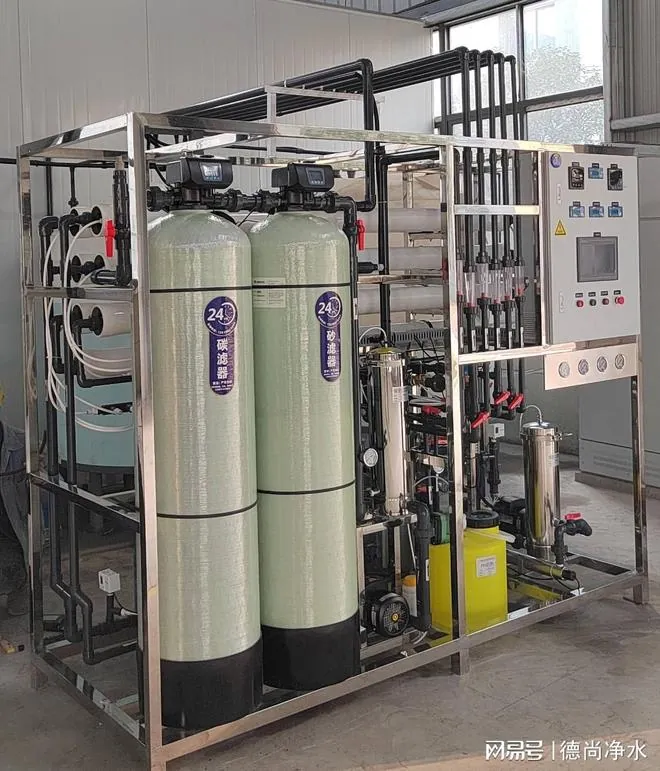
Stage 1 — Sediment pre-filtration: PP melt blown cartridges (5-20 micron) remove sand, rust and suspended solids, protecting all downstream equipment.
Stage 2 — Activated carbon: Carbon block cartridges remove chlorine, chloramine, organics and improve taste — critical for product water quality.
Stage 3 — Water softening: A softener protects boilers, pasteurizers and heat exchangers from scale, extending equipment life and maintaining efficiency.
Stage 4 — RO or membrane filtration: For process water and ingredient water, reverse osmosis or PES membrane filtration provides consistent, high-purity water for critical applications.
Stage 5 — Final polishing and disinfection: A 1-micron or sub-micron final filter plus UV disinfection protects product safety in rinse water and final process water.
What Standards Apply to Dairy Water?
Dairy processing water must meet potable water standards in the country of production. Food safety frameworks — FDA in the US, EU food contact regulations in Europe, and HACCP systems worldwide — impose additional expectations on water contact materials. Choosing food-grade certified filter components simplifies compliance and audit readiness, and protects against costly product recalls.
How Often Should Dairy Filter Cartridges Be Replaced?
- PP sediment cartridges: every 3-6 months, or when pressure differential rises
- Carbon block cartridges: every 6-12 months
- RO membranes: every 2-4 years with proper pretreatment
Monitoring pressure gauges, flow meters and water quality parameters (conductivity, turbidity) tells you exactly when filters have reached capacity.
Conclusion: What Water Filtration Does Your Dairy Plant Need?
Every dairy plant needs at minimum sediment and carbon filtration to protect product quality and equipment. As operations grow, softening protects the critical boilers and heat exchangers, and RO or membrane filtration delivers consistent ingredient-quality water. The investment in water treatment is small compared to the cost of equipment failure, product spoilage, or a failed audit — and it pays for itself in reliability and food safety.