How Often to Change Industrial Water Filter Cartridges: A Practical Guide
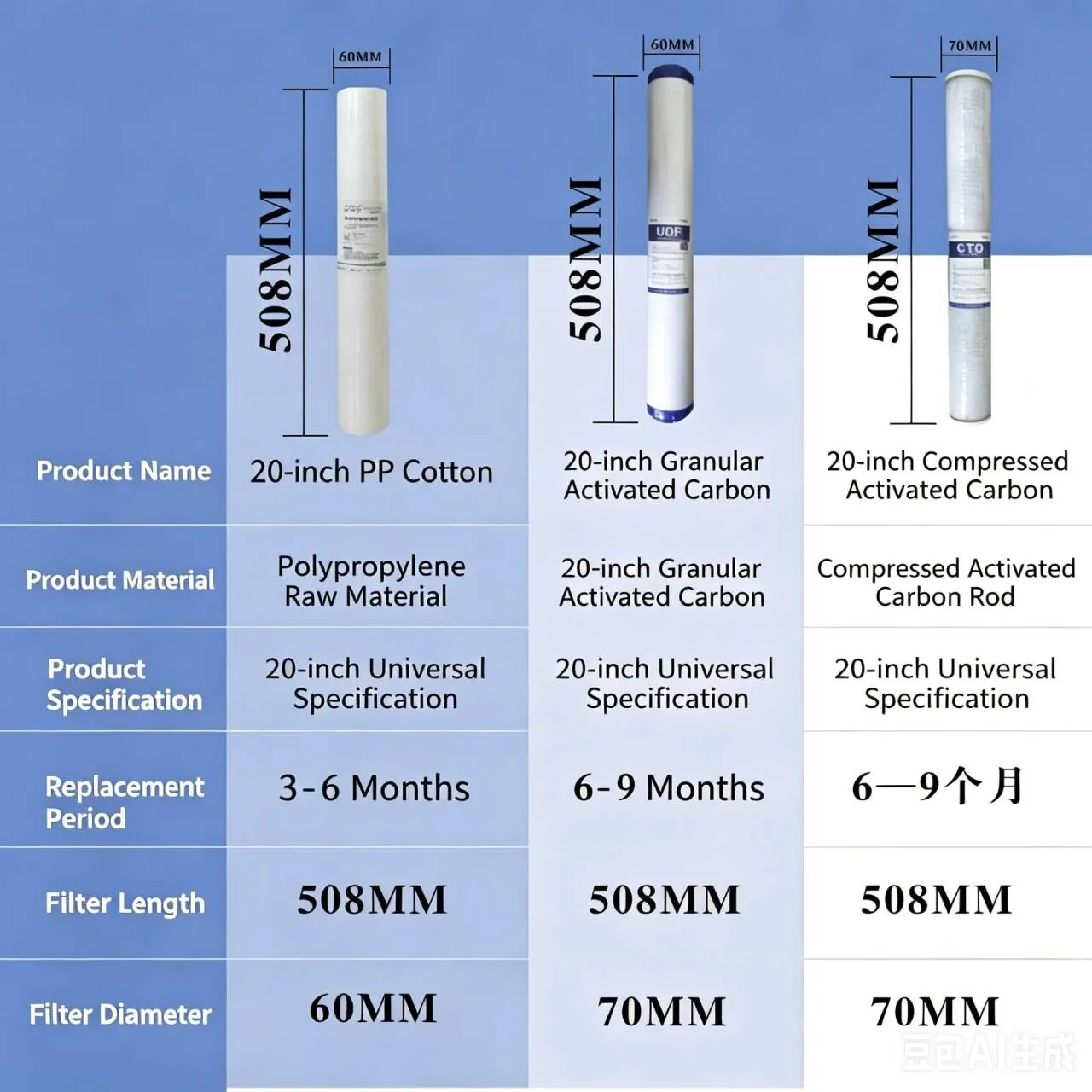
One of the most common questions industrial plant operators ask is: how often should I change my water filter cartridges? The honest answer is that there is no single universal interval — replacement frequency depends on feed water quality, system flow rate, cartridge type, and how much water you process. This guide gives you practical replacement schedules and the warning signs that tell you it is time to change.
What Determines Cartridge Lifespan?
Four main factors control how long a filter cartridge lasts:
- Feed water quality — high sediment load (turbidity, sand, rust) clogs cartridges much faster than clean water.
- Flow rate and duty cycle — the more water passes through, the faster contaminants accumulate.
- Cartridge type — wound cartridges have high dirt-holding capacity; melt blown cartridges trap finer particles; carbon blocks remove chlorine and organics but also load up faster.
- Pre-filtration — a 50 µm pre-filter before a 5 µm cartridge dramatically extends the fine cartridge's life.
Typical Replacement Intervals by Cartridge Type
| Cartridge Type | Typical Service Life | Change Trigger |
|---|---|---|
| PP Melt Blown 5 µm | 3–6 months | Pressure drop > 15 psi or visibly discolored |
| String Wound 5 µm | 3–6 months | Pressure drop > 15 psi |
| PES Membrane 0.22 µm | 6–12 months | Flow decline or biofouling signs |
| Carbon Block | 3–6 months | Chlorine breakthrough or taste/odor return |
| RO Membrane 4040/8040 | 2–5 years | Salt passage increase > 10% or normalized flow drop |
The Pressure Drop Rule of Thumb
The simplest and most reliable indicator is differential pressure. Install pressure gauges before and after the filter housing. When the pressure drop across a clean cartridge at your normal flow rate rises by 10–15 psi (0.7–1.0 bar), the cartridge is loaded and should be replaced. Waiting longer forces water through a clogged media, reduces system flow, and can starve downstream equipment.
Signs Your Cartridge Needs Changing Now
- Noticeable flow rate drop at the point of use
- Pressure gauge shows a significant increase in differential pressure
- Filtered water has a bad taste, odor, or visible color
- Cartridge appears dark, slimy, or deformed when inspected
- Water quality tests show contaminant breakthrough
How to Extend Cartridge Life
- Add a coarse pre-filter (50–100 µm) upstream of fine cartridges
- Flush or backwash pleated and membrane cartridges per manufacturer instructions
- Keep cartridges in their sealed packaging until installation
- Replace cartridges in sets, not one at a time, to keep flow balanced
- Log replacement dates and pressure readings to build a maintenance history
Partner with a Manufacturer Who Supplies the Right Cartridges
Working directly with a manufacturer like Jingze Water means you can order consistent cartridge quality, get OEM-compatible options, and receive technical guidance on the right filtration train for your source water. Whether you need PP melt blown, wound, carbon block, or PES cartridges, we help you match the cartridge to your application and duty cycle.